
Quick Sprout recommendations for website builders are based on months of research and testing. We’ll never point you to a product or service that we don’t believe in or have first-hand experience with. Our content is reader-supported, which means if you click on one of our links to a recommended website builder, we may earn a commission.
You want a website, but you’re not a coder, an engineer, or a designer. Maybe you’re not even super technically proficient. You just want a website. You want it to look good and work well and not take forever to build. Luckily these days, a website builder or a template can get you a professional-looking website in minutes. Literally minutes.
There was a time when you could really tell the difference between the site a web designer would build and one a novice could create. But these days, the playing field is leveled. I’ve built lots of websites, and most of them I didn’t use a designer for — I used a template or a website builder. (And, yes, I still made money off of those sites.)
To find the best, I reviewed 31 website builders, testing them on their ease of use, the professionalism and quality of the final product, customer support, and pricing. I have 4 favorites I recommend.
I narrowed down 31 website builders to my 4 top picks:
WordPress — No subscription fees Wix — Automates the tough choices Squarespace — Beautiful, modern templates Ucraft — Free one-page sites
If you’re looking for the easiest way to create a site, a website builder like Wix or Squarespace will certainly get you there. These are subscription services with drag-and-drop interfaces and we’ll explain the pros and cons of each of them in detail.
But you should also consider building your own website with WordPress. There’s no subscription fee and your site will be basically limitless. It’s not an all-in-one service, but it isn’t hard to sign up for the other pieces you’ll need (a domain name, hosting, and a theme). In this guide, I’ll walk you through this method too.
Methodology and criteria for my website builder reviews
Ease of use. There should be no technical proficiency required and no need for a designer or other outside help. We asked ourselves, How easy it is to get started? And, how long does it take to build a nice looking site?
A professional high-quality final product. A professional, well-designed website that reflects your business. We asked, What do the templates look like? How customizable are those templates? Can I add an ecommerce option to sell things on my site? Can I add a menu? A form? A map? Reservations?
Customer support. We wanted to know that it’d be there if you needed it, but we also expect everything to be intuitive enough that you don’t feel like you can’t go it alone.
Pricing. Pretty simple, but we didn’t just ask how much does it cost? We also asked, Which tier should a person start on and when will they need to upgrade? If it’s free, what’s the trade-off? Does it come with a free domain? Does it come with email addresses? Any other extras to be on the lookout for?
The 31 top website builders compared WordPress Best for content management Free open-source software forever You’ll need to buy a domain name (~$10 per year) and web hosting (~$8 per month)
I love WordPress. (We run Quick Sprout on WordPress.) And I’d recommend anyone starting a website really consider starting it with WordPress, especially if you’re running a content site. Why’s that?
WordPress runs a third of the internet and it has the best content management system — all available for free. Some huge names you’ll recognize run their sites on WordPress.
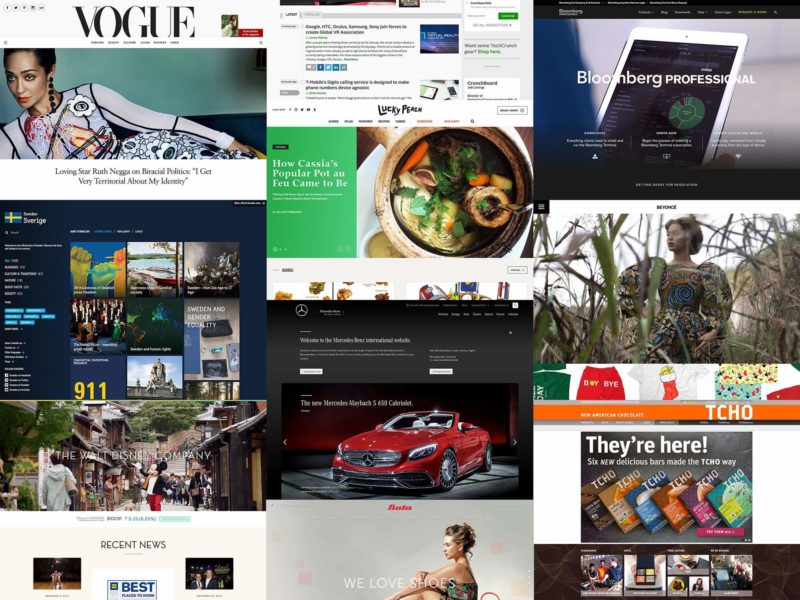 If you run WordPress you’ll be in fine company, including Vogue, Lucky Peach, and Beyonce’s own website.
Because WordPress is so popular there’s a huge community of developers and designers creating themes and plugins for you to use.
Unlike other website builders, WordPress isn’t a one-stop shop. You’ll also need:
A domain name – This is your website’s address. Ours is QuickSprout.com — you’ll need to buy yours. We recommend going to Namecheap. Domains are typically around $10–15 and Namecheap includes the only add-on you need for free: privacy protection. Hosting – This is where your website’s files will be stored, which allows a user to access your site. I recommend starting with a shared plan (the lowest tier) with either SiteGround, of if you don’t mind paying a premium, to go with WP Engine, which is optimized for WordPress. You can read more in our review of the Best Web Hosting Service. This will cost you about $8 a month, but there’s usually promotional pricing for half-off the first contract. A theme – A WordPress theme controls the look of your website and how all of the information in it works, so a theme is one part design and one part feature set. Every WordPress site comes with a basic theme, and there are thousands of free and paid themes you can select from in the WordPress themes directory. I like to use the $30 themes at Themeforest. If you go with WP Engine, your plan includes 35 or more themes already, which does a bit to defray the steeper price point.
Once you’ve gotten your domain name and your web host, you’ll be able to install WordPress within a few clicks and get your login credentials. They don’t call it WordPress.org’s “famous 5-minute installation” for nothing.
Log in and you’ll see that your site is pre-loaded with a starter theme. Using as different one? Simply install it. From here, you’re set to adjust your site’s settings, menus, and page structure, and start writing blog posts. WordPress is hands down the winner when it comes to running a content-driven site.
If you need help at any point, there are tons (literally tons) of guides on the internet. I recommend starting with WordPress’s support page, which will answer questions like Where to start, Writing posts, and Using themes.
Wix Automates the tough choices Paid plans start at $11 per month billed annually Free trial period: 14 days
It’s easy to choose Wix as one of the best website builders. It truly takes on the name. Wix’s artificial intelligence asks you a few questions and literally builds your website before your eyes — unique color palette, features, and design all in one. It’s one of the best tools I’ve seen to get a site that matches your vision, even if you don’t know yet how you’d articulate that vision. Honestly, building a site with Wix’s AI felt a little like getting my mind read.
Wix has been at the forefront of this revolution, and is looking to closely combine AI and website building.
—Why AI is the best tool to help build your next website, TechRadar
Wix does have a free tier, but I don’t recommend it. It has some of the most in-your-face “this was not paid for” company branding I’ve seen — an instant trust breaker. Wix free sites also have one of the most cumbersome domain structures: yourusername.wix.com/sitename so we’d be QuickSproutEditorial.wix.com/QuickSprout. Connecting your actual domain also allows you to attach a Google Analytics profile and add email accounts if you’d like ($5 per account per month, or about half that with an annual plan). Unfortunately, none of this pricing is very upfront. Wix wants you to connect your domain before you see the email pricing, for example. I found answers to pricing questions in the support center, not the user flow.
To start creating a Wix website, just click create site. You’ll be asked a question: What kind of website do you want to create? From there, the AI will help you build your website. (You can opt-out and go it alone at this point, too, but we appreciated the AI’s help.)
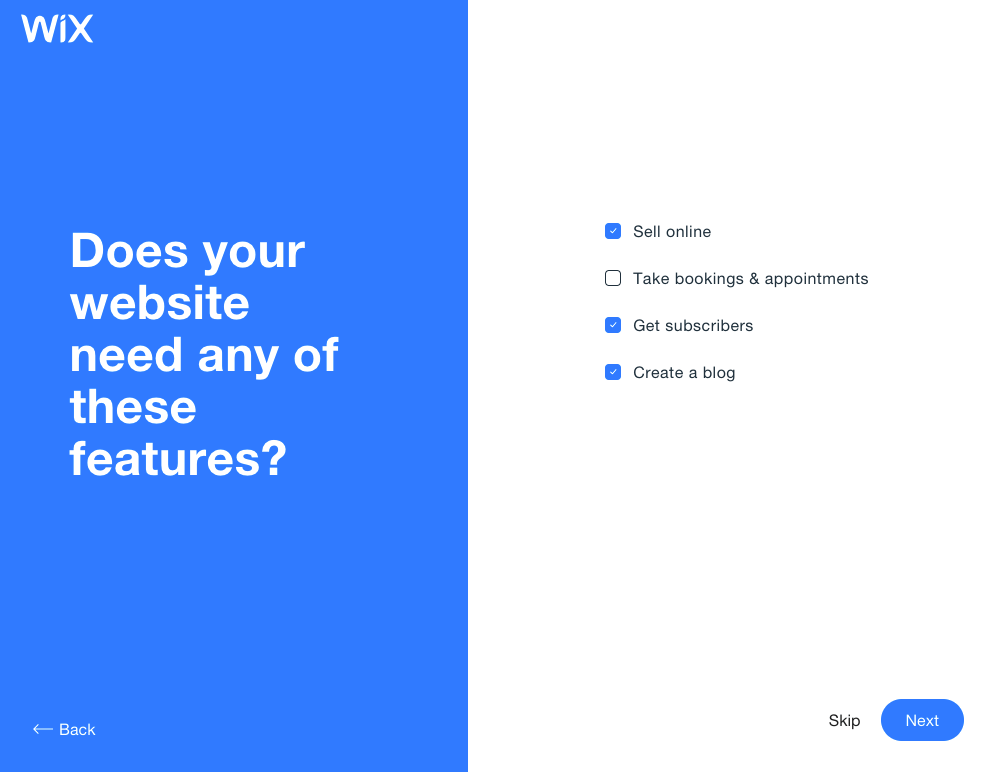 One of the first screens you’ll see when you build a website with Wix.
When I tested Wix, I loved how easy it was to find a template that matched our vision. The AI stayed with me as I edited the page. A little pink square in the bottom that looked like a chat pop-up helped me pick the next thing to edit and showed me how to do it.
The Wix AI matched my new site to my business’ existing online presence, used my logo to create a color palette for my site, which it pulled right from Instagram, and gave me a template pre-populated with that logo and our street address. Connecting images from existing social media accounts made it easy to pull in all the assets we already owned.
I was using a local yoga studio as an example and the site looked really close to the site the yoga studio actually has. It’s kind of a fun thing to try — pick a business you already know and see how close Wix’s AI comes to replicating it. What’s even juicier, is I bet they paid a web designer a bit of coin for their design, and I did mine for free with an AI assistant.
>As AI progresses, it will be harder and harder to know which site was built via AI and which was built via a designer. You can think of it like passing a “design turing test”, i.e. in the future humans will not be able to differential between the two. Then, it’ll have to get innovative. Instead of mimicking what it is learning from what’s created, it will get better and more experimental. It’s easy to see how soon most websites that are created use AI in some way.
—Wix VP & GM of Consumer Experience Nitzan Achsaf told TechRadar
There’s a lot of variety between the Wix themes, and the personality of each theme matches its name well. The Business Advisor had a spot-on graphic of an analytics dashboard, while Astrologer features an astral hero image.
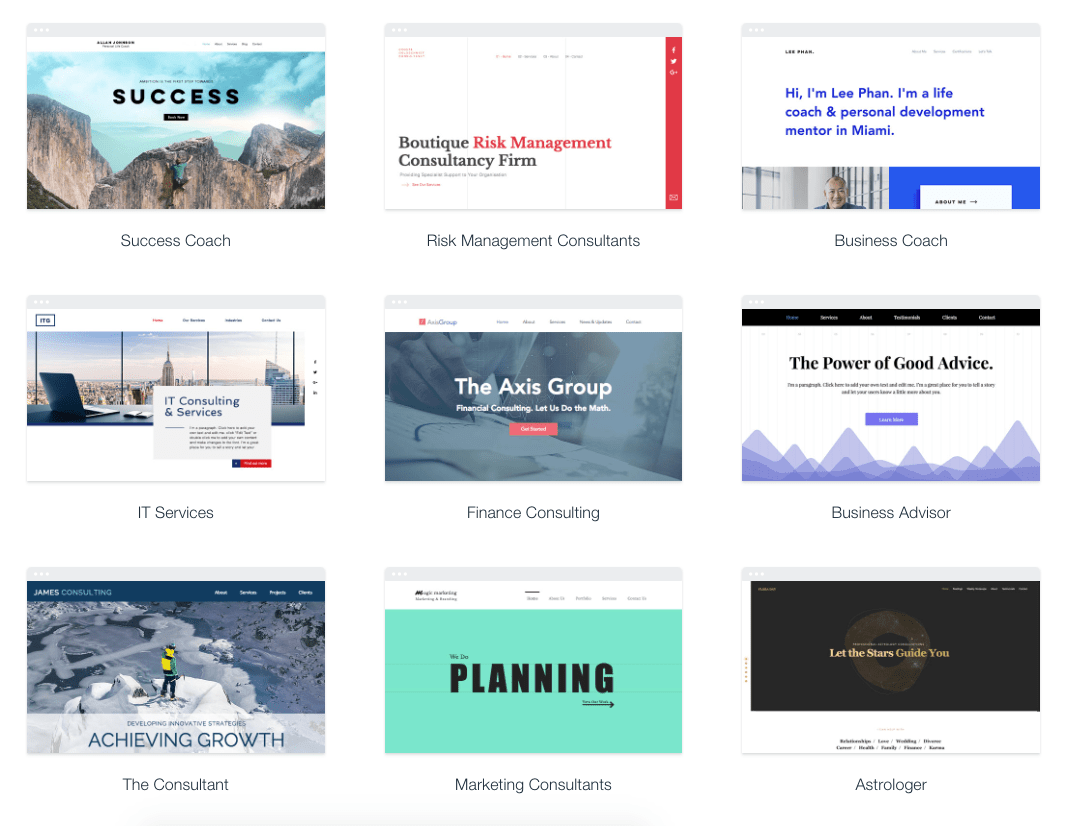 Some of Wix’s business-centric themes.
Editing your desktop site with Wix does require some patience. To change the text on a text box, you’ll need to hover precisely in the right spot. I did some deep breathing and was able to find enough inner zen to make all the changes I wanted. The mobile editor has the serene helpful feel I wish the rest of the editor maintained. It’s super easy to click through the options for how your menu, quick actions, and scroll options work on your mobile page. What you change in the mobile editor doesn’t affect anything that happens on the desktop.
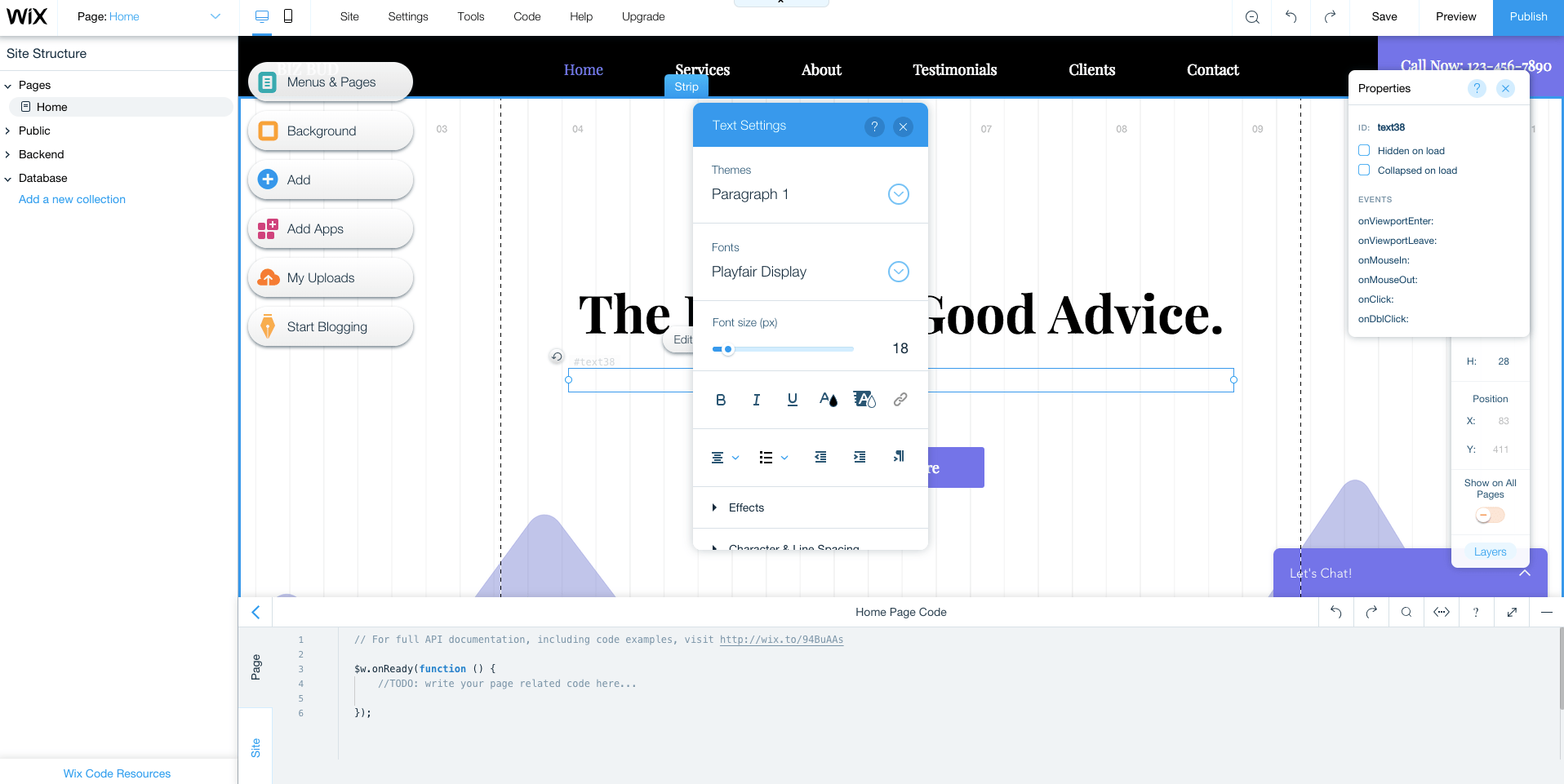 Wix’s editor requires patience — and some clicking around.
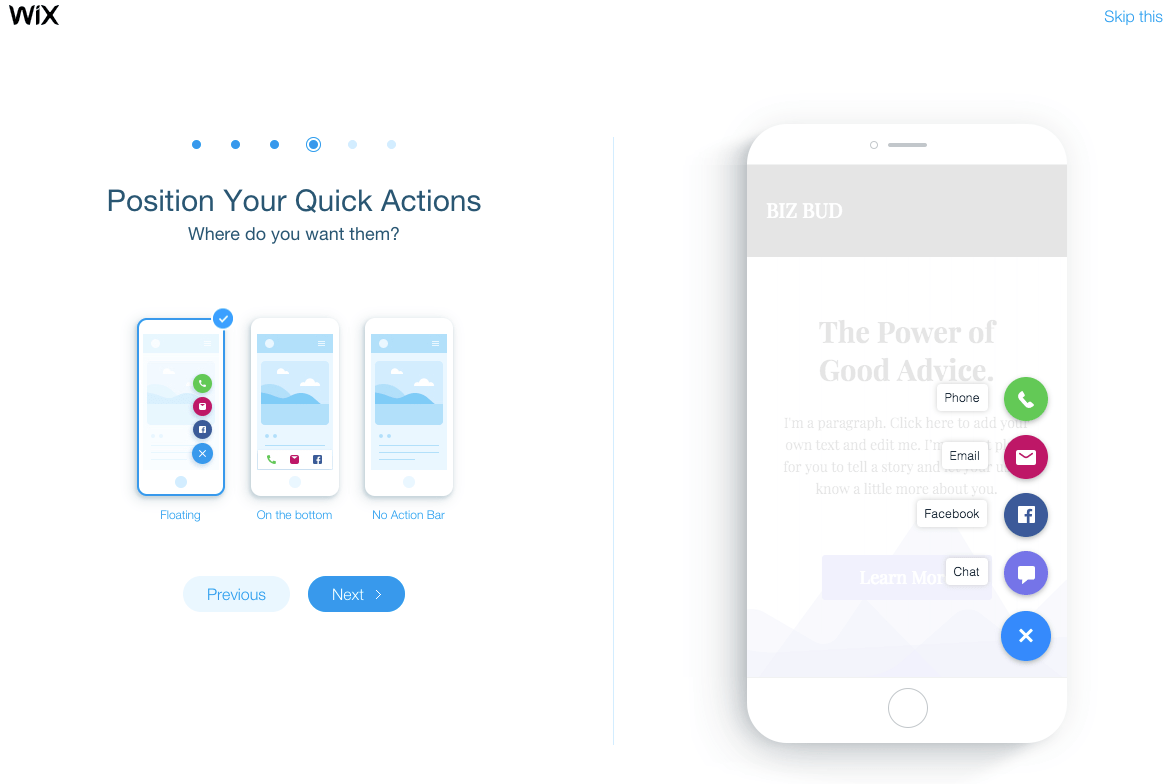 I prefer the easier-to-use mobile editor.
Take note: all of Wix’s plans are automatically set to auto-renew. Sticker shock is real, especially if you signed up with an introductory promo pricing (at the time of publish, premium plans were a full 50% off, for example). There are many frustrated customers on TrustPilot who’re unhappy with this. It is possible to turn off your auto-renew, but you’ll need to do it more than 14 days before your plan’s anniversary — and if you do it during your 14-day free trial, your trial will be cancelled immediately.
As for which paid plan to pick, you have 7 options: 4 “regular” and 3 “ecommerce.” The difference really boils down to whether you’ll be accepting payments on your site or not. If you’re not sure about how much bandwidth you need, you can always start with a smaller subscription: if you go over the limit, you’ll get a notice from Wix (with no penalty) and can use that as your signal to upgrade.
Squarespace Stellar templates Plans start at $12 per month billed annually ($16 month to month) Free trial period: 14 days (plus a 7-day extension)
“Build something beautiful” is right. There’s no doubt that Squarespace wins the design and beauty contest here. The user interface has a bit of a learning curve and there’s not much of a Squarespace community to help you out, but the page you’ll end up publishing will be phenomenally good-looking.
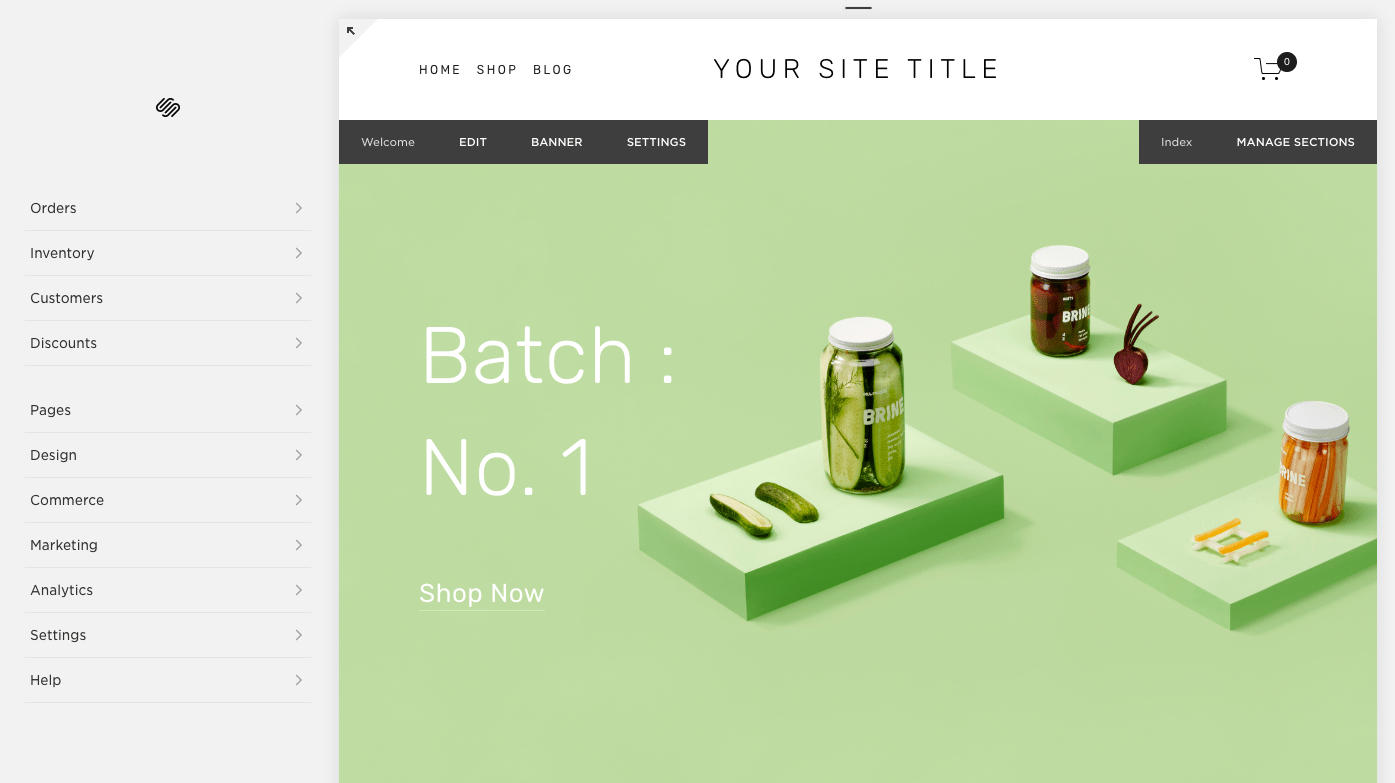 Squarespace’s templates are all modern and beautiful.
Building a website with Squarespace can feel a little like building IKEA furniture: in the showroom it’s all so beautiful and simple, but somehow it feels a little more complicated to put together than promised. It can be hard to understand where exactly you are in the Squarespace editor. I kept getting notifications that I was editing demo content, or that I’d see the social logos once we connected our social media, or that we could unlock this or that feature with a paid subscription, but Squarespace didn’t go the extra step to make it easy to make that required move. It was a lot of fumbling through a beautiful interface, not exactly sure what changes were real, or where to head next. I also had some issues saving changes — an error message popped up and we had to move on, without our changes.
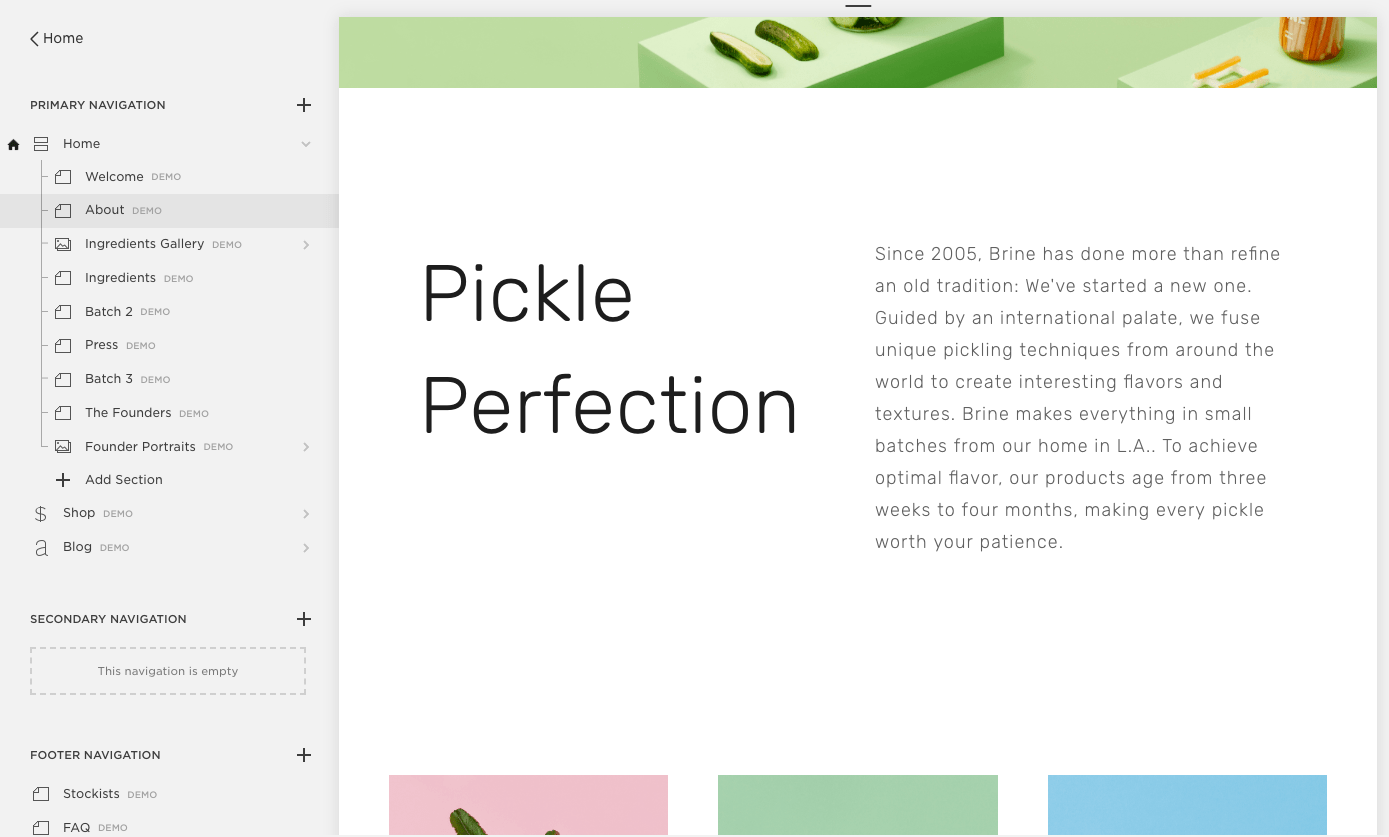 Editing a site in Squarespace has a bit of a learning curve.
Unlike IKEA, Squarespace is pricier than other website builders. That being said, I love the way sites built with Squarespace look, and think it’s one of the simplest ways to create a beautiful, contemporary site.
Ucraft Free one-page sites Paid plans start at $10 per month billed annually Free trial period: 14 days
If you need something super simple, you may be happy with the free Landing Page option from Ucraft: you can create a single, mobile-ready page and connect your domain for free. The free version doesn’t get rid of the Ucraft branding but it’s minimal and not invasive. The template has all the features I’ve identified in my anatomy of a high-converting landing page.
You can drop the branding and sell up to 50 products by upgrading to a $10 per month Pro Website plan, and sell up to 1,000 products on the $21 per month Pro Website plan. (Ucraft recently dropped its $6 per month Basic plan, and lowered the price of the Pro Website Plan from $14 to $10 per month.) If you have more items to sell, upgrade again, but note that once you upgrade, you can’t drop back down to a less expensive plan.
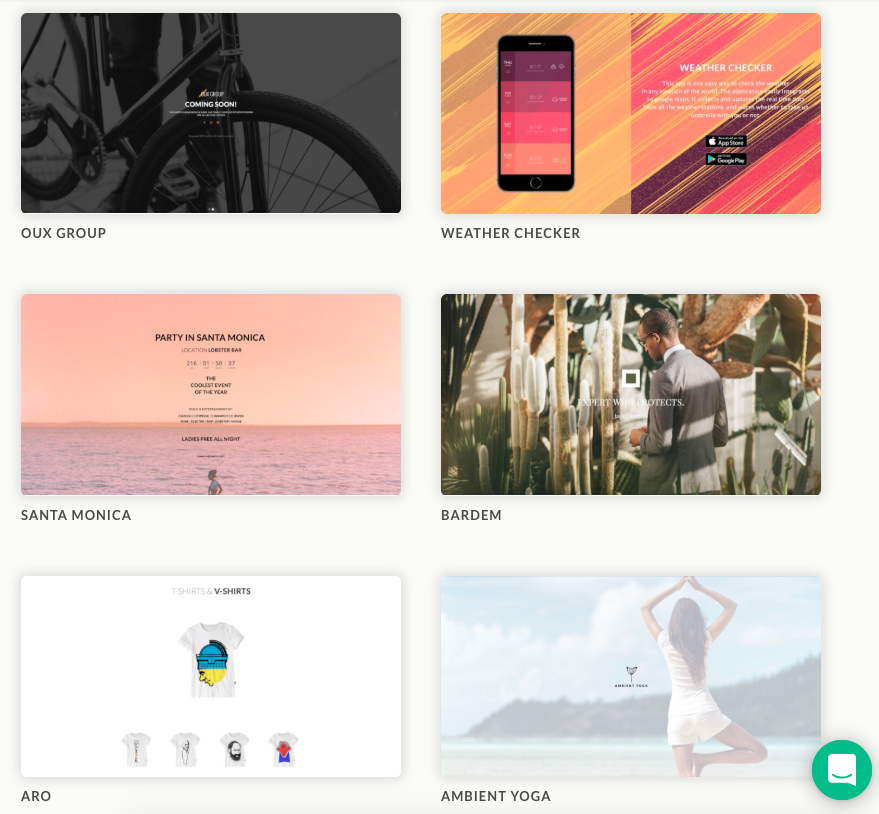 Ucraft’s themes are elegant and streamlined. It’s one-page free sites are designed to be a long scroll with anchored sections.
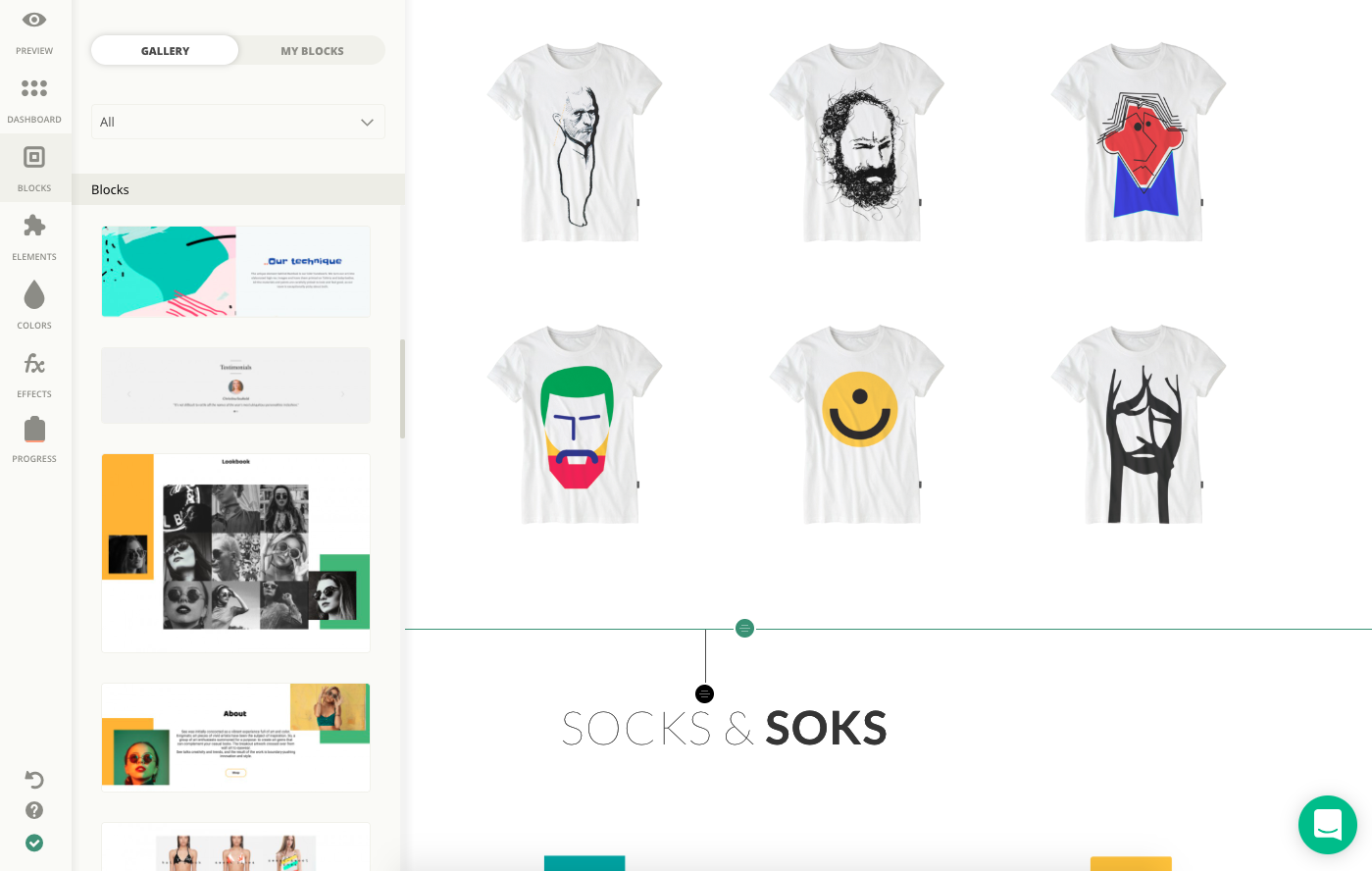 Build a Ucraft site using drag-and-drop blocks and elements.
Adobe Muse No longer in service Last updated March 2018
As of March 2018, Adobe has stopped releasing updates to its website builder software, Adobe Muse, acknowledging that simpler site builders like Wix and Squarespace have taken over: “For simpler websites, we’ve seen the emergence of Do-It-Yourself (DIY) website creators that use customizable templates to quickly create responsive websites that can be easily modified by the designer or a client.” — End of service for Adobe Muse
Cargo Collective Honorable mention Great for artist portfolios
Cargo Collective has amazing templates and designs perfect for artists and art galleries, but definitely not for everyone. If you’re after templates designed for displaying images and image galleries, definitely take a look.
Cindr Super fast set-up Very limited customization
True to its slogan, Cindr is very fast to use: add in new “blocs” and move them, but want to do much customization (say, if your team doesn’t have exactly 2, 3, 4 or 6 people on it…) and you’ll quickly get frustrated. I certainly was.
Duda Web design reseller Dealbreaker issues on homepage
There were too many deal-breaker annoyances on the Duda homepage — broken links, unclear organization, scroll bars on pages that don’t scroll, and typos — for me to recommend building your site with them. And it’s just as well, as Duda’s primary focus is on white-labeling and reselling web designs, not on creating and building your own site.
GoDaddy GoCentral Frustrating customer service Only 8 templates
I’ve never loved the customer support from GoDaddy and GoCentral is no exception. There are only 8 templates, and you can only make extremely limited font and color changes on them. No moving or resizing. The GoDaddy forums are full of frustration and confusion. Case in point: GoDaddy updated live templates so their headers no longer looked the same. Support recommended changing themes if you didn’t like the new header. What a nightmare.
Homestead Dated templates Not recommended
The
Read more: quicksprout.com
The ecommerce industry is booming. It seems like everyone is coming up with different ways to get into this space.
But when we think of ecommerce our minds typically don’t jump to food. Most entrepreneurs seem to focus their efforts on inventing or modifying a new product that can solve problems
With that said, there is lots of money to be made in the online food industry.
As of 2018, the online grocery shopping in the United States is a $17.5 billion industry. But there are plenty of other ways to sell food online as well.
For example, maybe you have a restaurant and want to expand the way your customers order takeout. The global online food delivery market is growing at a 14.8% year-over-year rate.
That’s not all. Take a look at this graph from eMarketer on the projections for total online food and beverage ecommerce sales in the coming years.
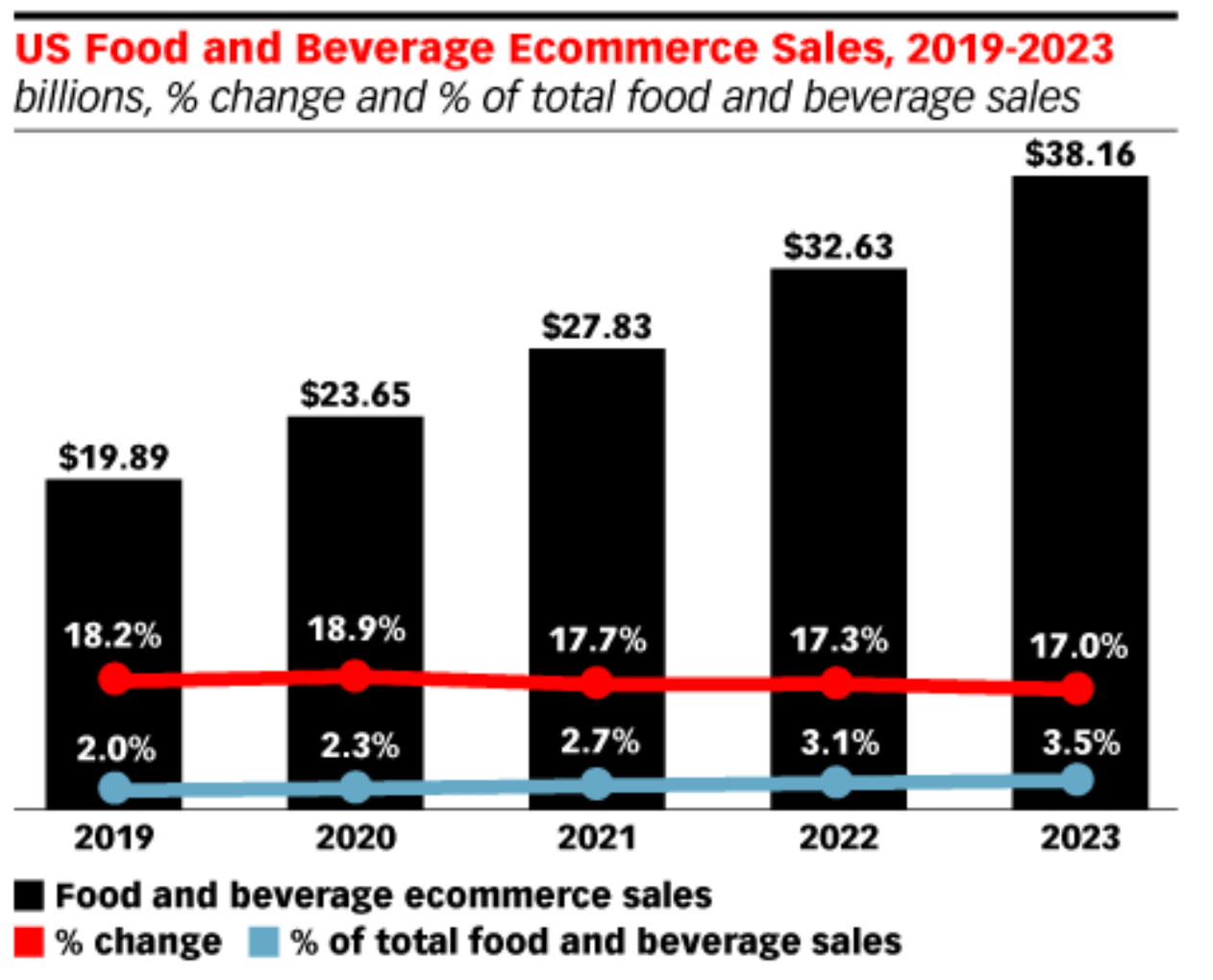
Online sales in the US alone are expected to double over the next four years. So it’s safe to say that there is plenty of money to be made in this space.
Here’s the reality of the situation. Everything in our lives has gone digital. We’re ordering everything else online, so it’s only natural that online food sales is the way of the future as well.
But when you search the web for how to create an ecommerce site, the resources for selling food online are pretty scarce. That’s what inspired me to create this guide. I’ll tell you everything you need to know about building an online platform for selling food.
Understand the law
Before you do anything, you need to make sure that you’re familiar with all of the legal regulations for selling food online. This will vary depending on your location, as well as the type of food you’re selling.
For example, if you’re selling in the United States, you’re going to have to follow different guidelines than if you were selling in Europe.
Here’s something else to take into consideration. Are you planning to prepare and sell food out of your home? Or are you selling out of an industrial kitchen?
Let’s say you were making homemade cupcakes in your kitchen at home. The rules that apply to you will be different than someone who is jarring sauce in the kitchen of their restaurant.
In the United States, you’ll need to follow the Cottage Food Laws, which vary slightly from state to state. Regardless of your location, here are some guidelines that are pretty standard across the board:
Annual inspection from the department of health. Zoning permits from the department of health and/or the department of agriculture. Valid business license in your operating state. Ability to properly store food (cold, dry, etc.). No pets in the home or kitchen.
These are just the minimum requirements, and it barely scratches the surface. So be sure to fully review your local requirements before you start selling any food online. Otherwise, you’ll risk violations that can shut your operation down.
Find a supplier
No matter what you’re planning to sell, you need to source a reputable supplier. Whether you’re planning to sell pre-made products or if you’re cooking everything on your own, this still applies to you.
The most challenging part about finding the right supplier is establishing their legitimacy.
For example, let’s say you’re planning to prepare food in your home kitchen. Costco would be considered a reputable supplier for your ingredients. Picking apples, tomatoes, or peppers from your neighbor’s garden is not reliable, reputable, or trustworthy.
If you’d rather use an online supplier, you can try using a resource like Food Master.
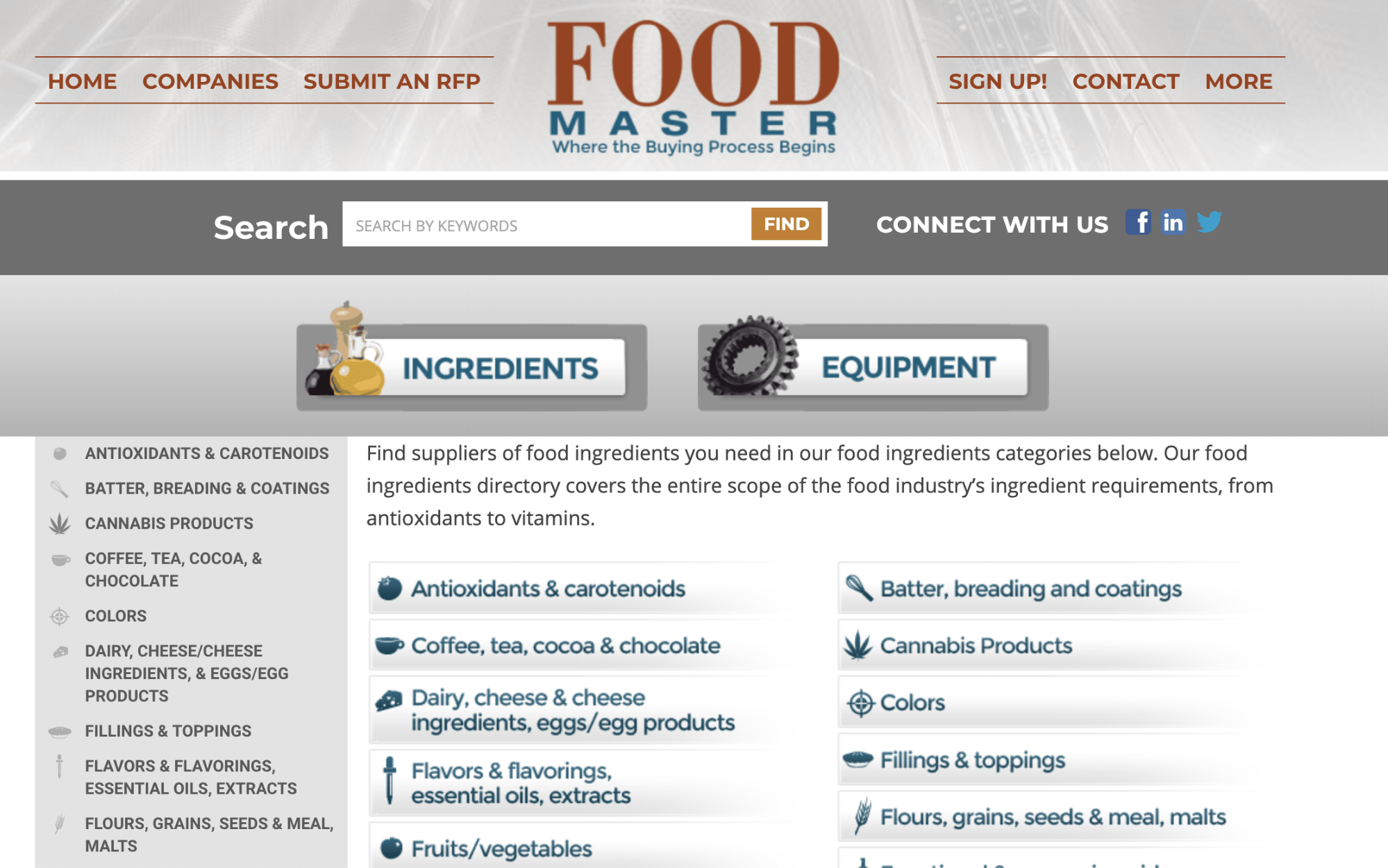
This is a massive online directory of ingredients. You can browse what you’re looking for by category, or search for specific keywords.
If you’re on the fence about a supplier’s reputation, it’s perfectly reasonable to ask them for their credentials. After all, the products you buy from your supplier will ultimately be consumed by your customers. So whatever you buy from them will directly impact your business.
Just because your supplier claims that it’s selling organic produce, it may not necessarily be true. Follow the supply chain to fact check everything.
Know your niche
Everybody eats. But that doesn’t mean that everyone is a potential customer.
This is a mistake that I see new entrepreneurs in the online food industry make all of the time. They assume that everyone will enjoy what they’re selling, and they don’t go after a specific niche.
You’ll have much more success if you can clearly define your target audience before you proceed. Then you’ll be able to make necessary adjustments to meet their needs.
For example, take a look at the meal plan options offered by Green Chef.
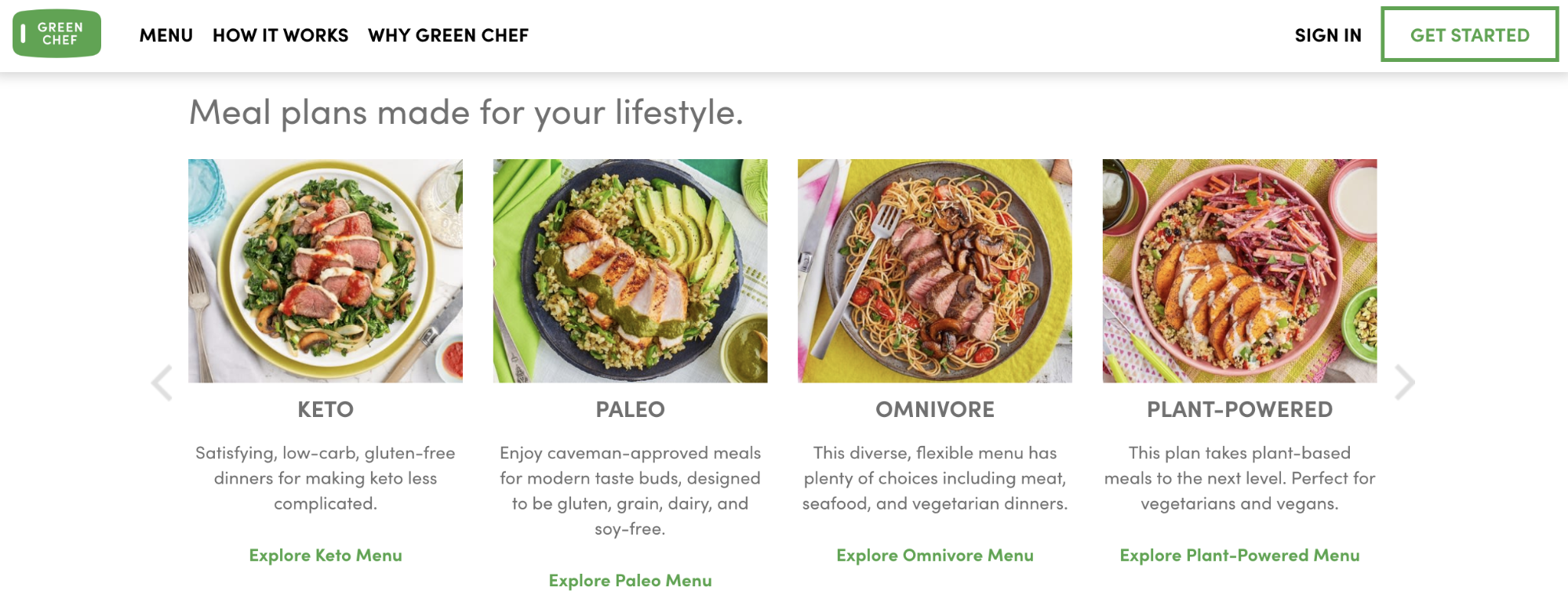
This company is targeting people with special diet needs, such as keto, paleo, or plant-based diets.
Are you going to target working professionals who don’t have time to cook? Or are you targeting families who need healthy options for their children?
Does your site want to focus on college students living in dorms? Or elderly residents who are living on their own?
As you can gather from just these handful of potential examples, the food you’re selling and the way you market yourself would be drastically different in all of these scenarios.
So rather than trying to compete in an over-saturated industry, pick a niche and run with it.
Focus on branding
Once your niche has been established, it will be much easier for you to go through the branding process. Your brand will be a combination of what you’re offering as well as who you’re offering it to.
People can buy food anywhere. Your brand needs to explain why they should buy it from you.
Think of a company like McDonald’s. When you hear the name or see their golden arches, you automatically have an association with what they’re offering. They are the epitome of a fast food burger chain. You know exactly what you’re getting and how you’re going to get it.
That’s because they’ve done an excellent job branding themselves. In the online food industry, these are the components you need to prioritize to establish proper branding.
Brand name
Your name should go far and beyond what you’re selling. This is another common mistake that I see new food entrepreneurs make all of the time.
For example, let’s say you currently sell cupcakes out of your home kitchen. You might be tempted to name your company something like Cassie’s Cupcakes.
But this name puts you in a box. What happens when you want to start selling brownies, cookies, and other baked goods? Don’t let your brand name restrict the future expansion of your company.
Use a domain registrar like Namecheap to see if the domain name for your brand is available.
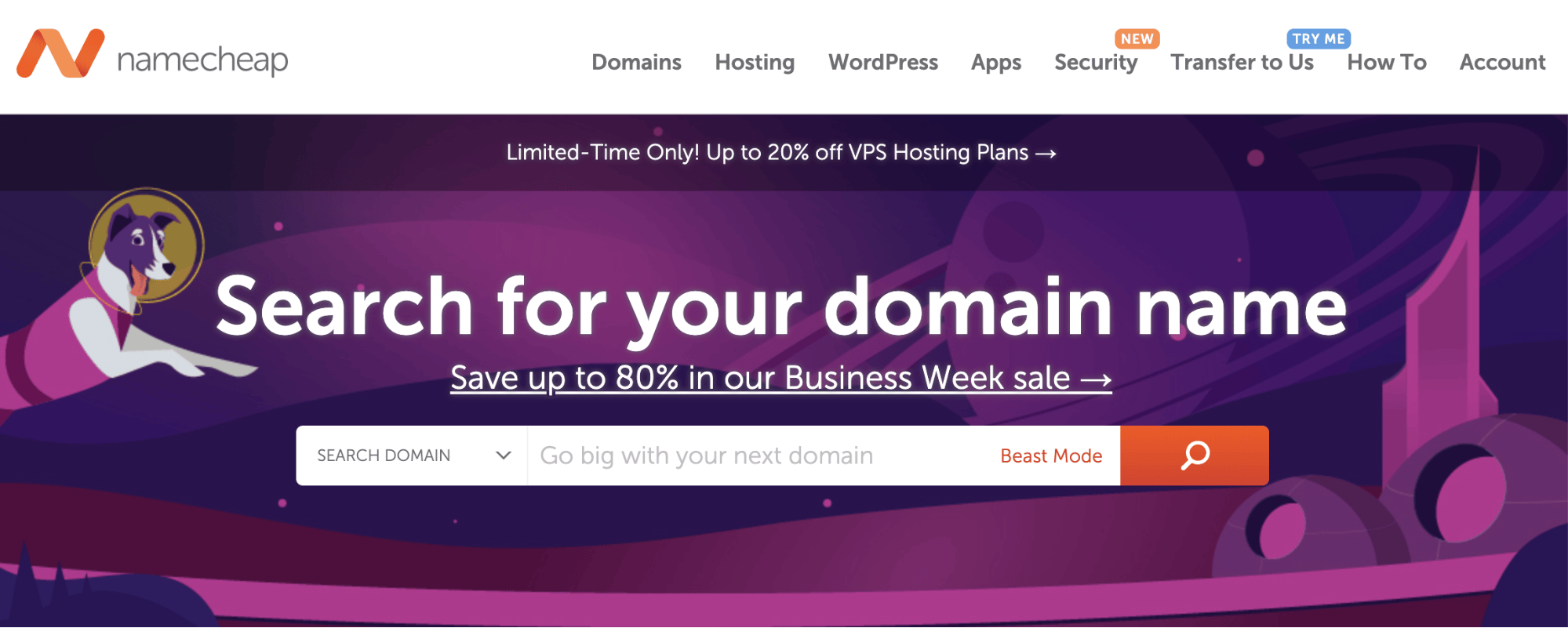
If your name isn’t available, and can’t be purchased for a reasonable price, it’s definitely in your best interest to think of another name. I’d also recommend reviewing my guide on how to choose a brandable domain name for help with this process.
Colors
Your brand’s colors will be synonymous with your branding strategy.
Don’t think colors are that important? Think again. Let me give you an example to show you what I’m talking about.
Starbucks.
Without even showing you a picture of this company, their website, or their products, I can almost guarantee that a color popped into your head when you saw the name. That’s because the brand has done a great job with their branding strategy.
I’ll give you another example from the online food space. Let’s take a look at the Blue Apron website.
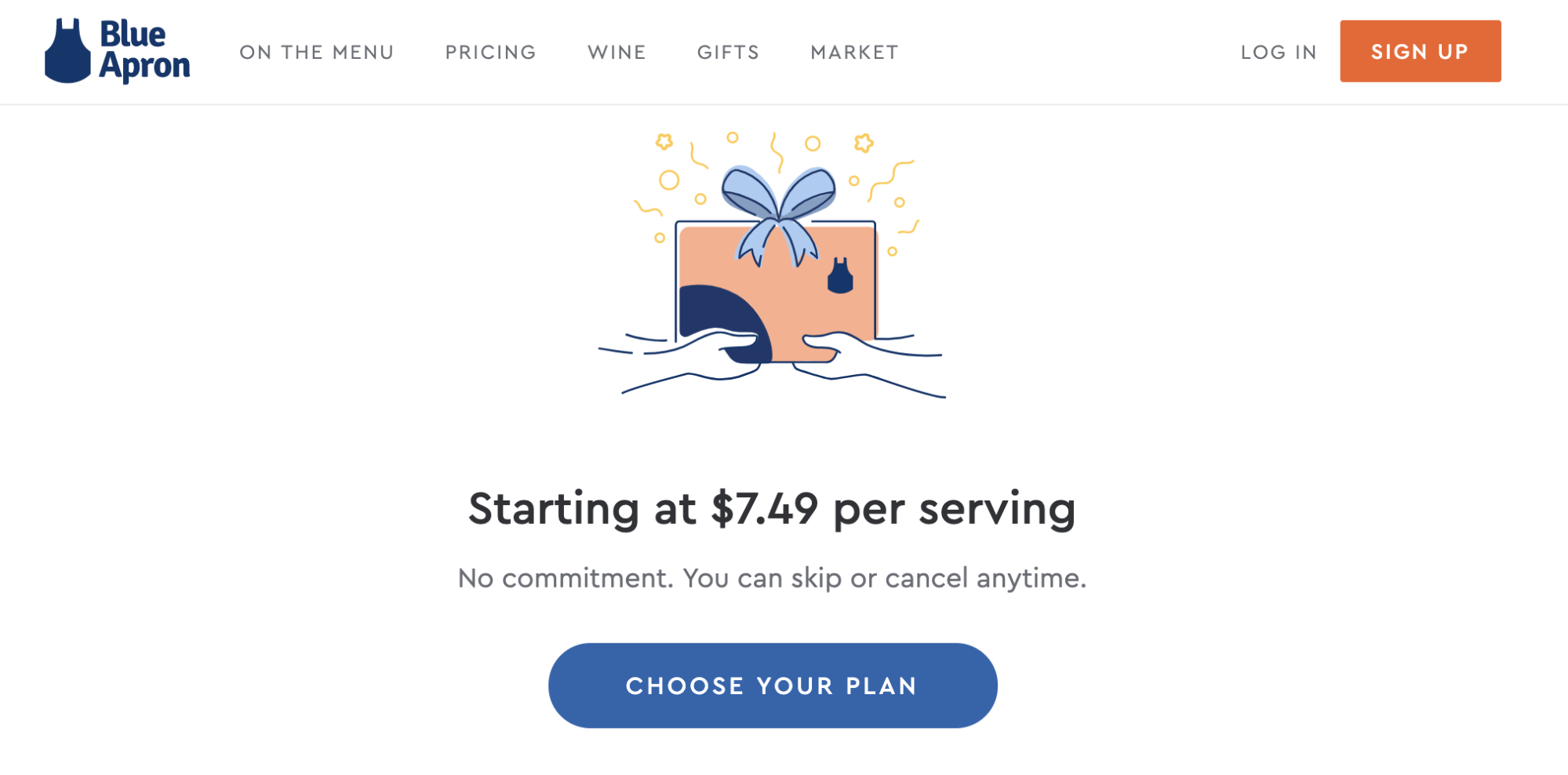
This is a fairly obvious example since there’s a color in the brand name. But as expected, the business has a blue logo and the website has a blue theme. If this company had a red or an orange color scheme, then it wouldn’t make sense.
Make sure your colors appeal to your niche. It’s also important to know how certain colors are perceived.
For example, let’s say you’re planning to sell fruits and vegetables online. Having a black or brown color scheme isn’t very appealing. It doesn’t give the perception of products that are fresh. In this case, you’d be better of going with some lighter and brighter tones.
Packaging and labeling
Like any product, the packing of the food that you’re selling online needs to be carefully thought out. In addition to having your brand name, logo, and colors integrated on the package, there are other things to take into consideration as well.
Food needs to be packaged in a way that keeps it preserved. If perishable items need to be kept cold, the packaging should reflect that.
There are also certain regulations that need to be followed for shipping foods that are perishable or fragile.
Furthermore, there are other requirements for labeling food. Your labels need to include:
Complete list of ingredients. Net quantity. Weight of all combined ingredients. Name and location of the company. Names and locations of suppliers. Expiration or “best by” dates.
Some of the packaging and labeling aspects of selling food online will fall within the legal scope of your operation, which we discussed earlier.
But it’s important to find a balance between a packaging that’s appealing to your customers while meeting all of those legal requirements.
Figure out your pricing strategy
Now it’s time to figure out how your online food store is going to make money.
You can’t just pull a price out of thin air. It’s important to factor in all of your operational and business costs to ensure that your products are priced in a way that is profitable for you. Your pre-defined niche will also factor into your pricing strategy.
For example, a business professional living and working in New York City will likely be willing to spend more on a single serving than a family of five living in the midwest.
You’ve got to come up with a pricing formula that drives ecommerce conversions. Take a look at Freshly’s pricing as a reference.
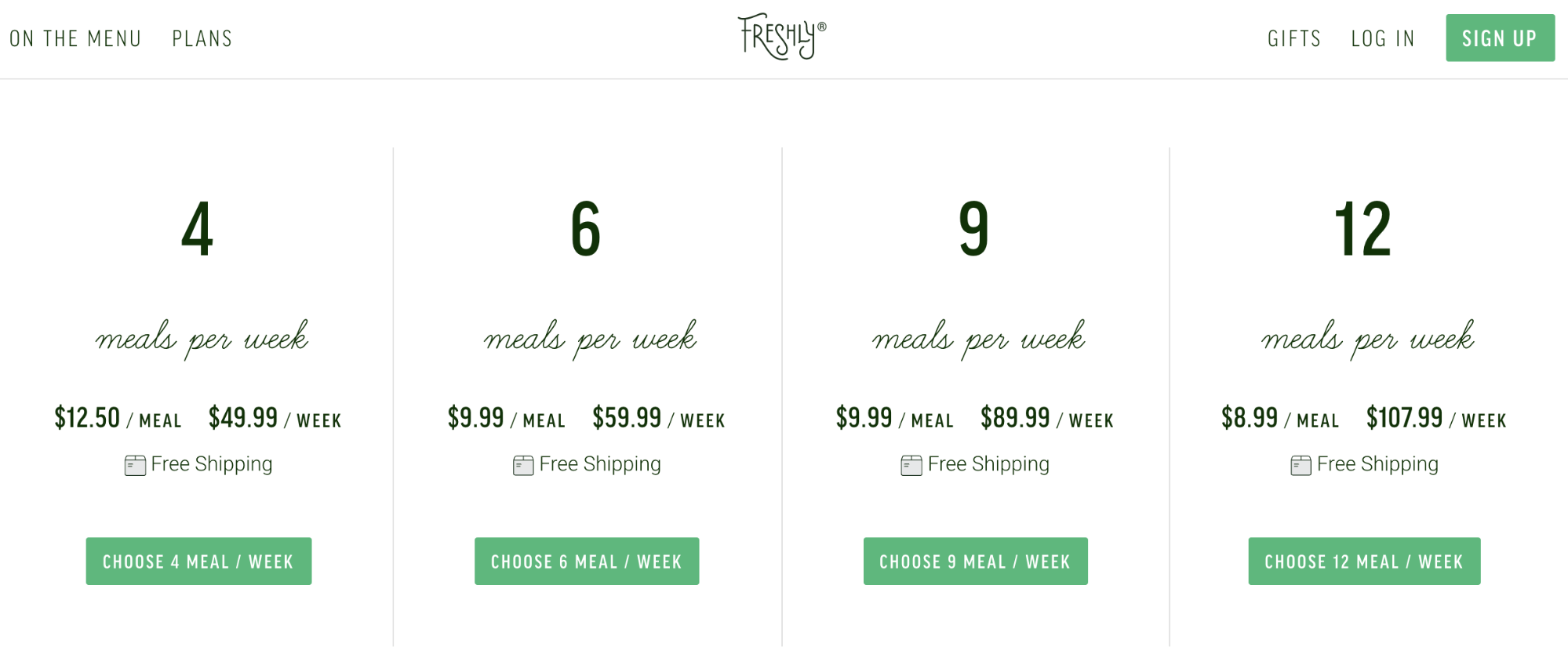
They’re using an age-old strategy, that’s not limited to the online food industry. As quantity increases, price decreases.
The cost per meal drops nearly 30% if a customer orders 12 meals per week as opposed to just 4. Sure, they’re making less per meal, but they’re getting more than double the weekly revenue from one subscription over the other.
If the cost per meal didn’t change based on quantity, then it doesn’t give your customers an incentive to spend more money.
Here’s something else to consider with the Freshly pricing strategy. All of the plans offer free shipping.
This is all related to perceived value. If you charge extra for things like shipping, it lowers the overall value of what you’re selling.
Review my guide on how to generate more profits by focusing on your pricing strategy. All of these concepts can be applied to businesses that sell food online.
Create an online store
There are two ways to sell food online. Each one is very different.
First, you can sell through online marketplaces, like Etsy or Amazon. Alternatively, you can sell through your own ecommerce platform.
If you’re going to use a marketplace, you need to meet additional regulations. These are put in place by the marketplace to protect themselves, as well as their customers. You’ll also need to get your company approved to sell through a marketplace by following specific standards.
You won’t have to take responsibility for managing a website and you’ll be able to reach an existing global audience if you decide to go through a marketplace. However, you lose some control and credibility with this method.
Personally, I’d recommend building your own ecommerce website to sell food online.
It might take a bit more effort on your end to get everything set up and running, but it gives you complete control.
In order to create your own online food store, you’ll need to choose a platform. Shopify is a great option for this.
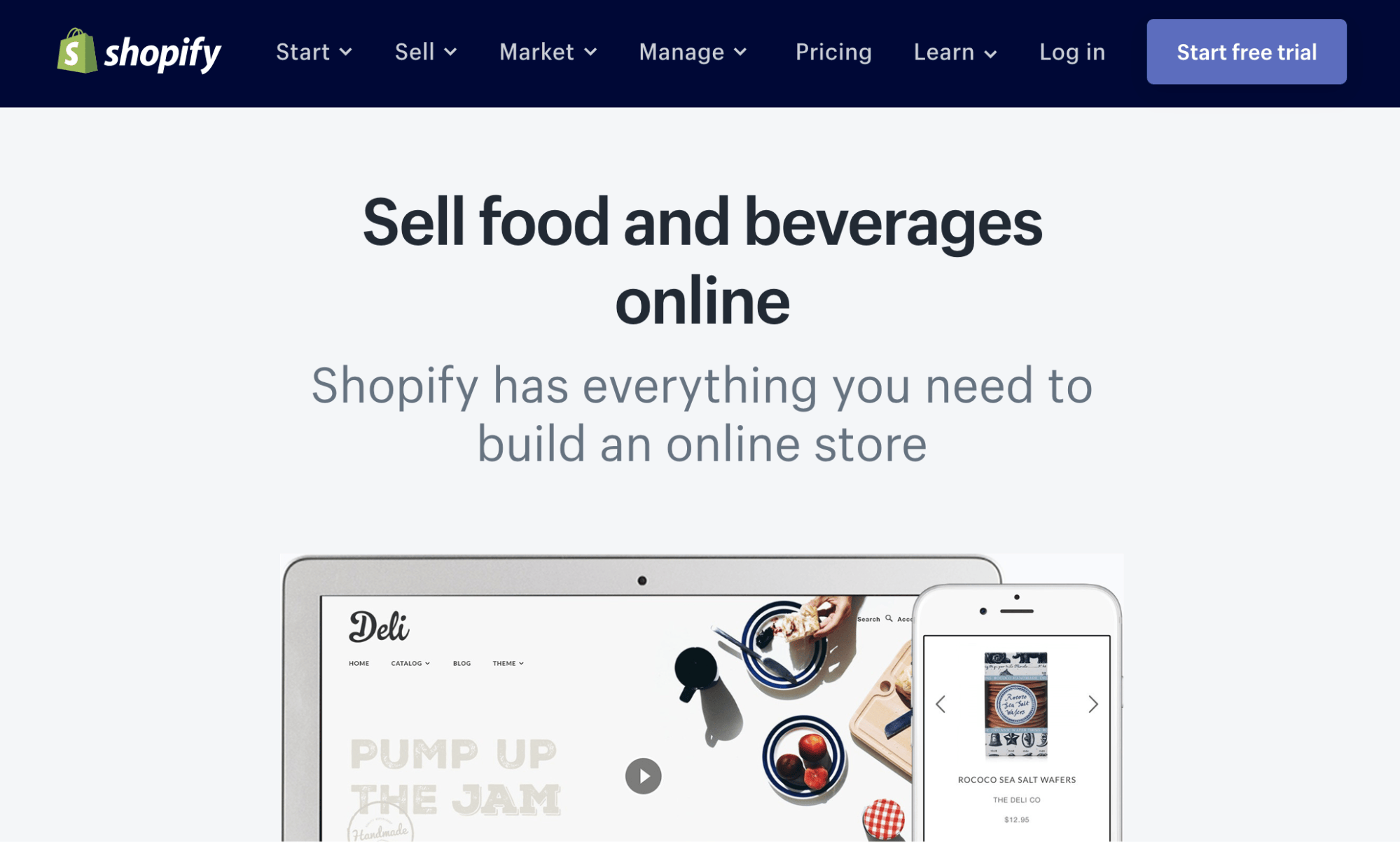
They’ll provide you with an easy to use interface, all the tools you need to track your orders, and professional templates that are specifically designed for selling food online.
If you’re not sold on Shopify, I’d recommend Wix and BicCommerce as alternative options.
Conclusion
There is a huge demand for online food. As ecommerce continues to grow and evolve, people are buying online more than ever before.
The online food industry is growing at a rapid rate. This is the perfect opportunity for you to take advantage of this situation.
But before you can start selling online, there are some preliminary steps that you need to take.
Educate yourself on the legal side of online food sales. Source a reputable supplier. Identify your target market. Create a brand. Learn how to properly package and label your products.
Once all of that has been taken care of, you’ll be ready to build an online store. After that’s set up, you’ll be able to sell food online with ease.
Read more: quicksprout.com